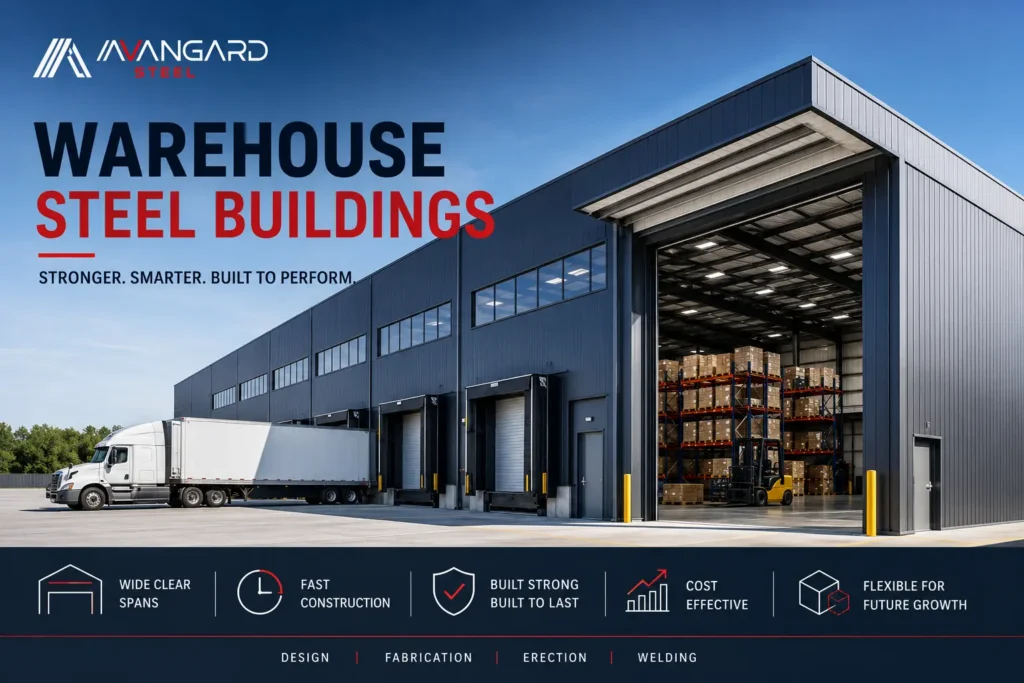
Warehouse steel buildings are becoming one of the preferred construction solutions for commercial, industrial, logistics, storage, and distribution projects across Canada. Structural steel provides the strength, flexibility, and efficiency needed to create large open spaces, support heavy operational loads, and accommodate future expansion.
Whether a project involves a new warehouse, distribution centre, manufacturing facility, storage building, or commercial expansion, steel construction can help reduce project timelines while delivering long term structural performance.
At Avangard Steel, we provide structural steel fabrication, steel structure erection, welding, custom metalwork, and industrial steel solutions for warehouse and commercial construction projects across Vancouver and surrounding areas.
What Is a Warehouse Steel Building?
A warehouse steel building is a commercial or industrial structure that uses structural steel as the primary building frame. Steel columns, beams, roof members, bracing systems, and connection components work together to create a durable framework capable of supporting the building envelope, storage systems, equipment, mezzanines, and operational loads.
Steel warehouse construction is commonly used for:
- Distribution centres
- Storage warehouses
- Manufacturing facilities
- Logistics buildings
- Cold storage facilities
- Industrial workshops
- Retail distribution buildings
- Commercial storage properties
Why Steel Is Ideal for Warehouse Construction
Warehouse buildings require large, efficient spaces that can support inventory, equipment, vehicles, racking systems, mechanical infrastructure, and daily operations. Structural steel is well suited to these requirements because it provides high load capacity without requiring excessive material or interior supports.
Steel also offers design flexibility, allowing developers and engineers to create wide clear spans, tall ceilings, loading areas, mezzanines, and future expansion zones.
- Large open interior layouts
- High structural strength
- Fast fabrication and installation
- Long term durability
- Flexible building expansion
- Efficient support for equipment and storage
- Compatibility with commercial and industrial systems
Benefits of Warehouse Steel Buildings
| Benefit | Why It Matters for Warehouse Projects |
|---|---|
| Clear span design | Creates larger open areas with fewer interior columns |
| Construction speed | Prefabricated steel components can reduce on site construction time |
| Durability | Structural steel provides reliable long term performance |
| Scalability | Future additions and building modifications can be easier to coordinate |
| Load capacity | Supports heavy storage, equipment, mechanical systems, and mezzanines |
| Design flexibility | Works with different warehouse sizes, layouts, and operational needs |
| Material efficiency | High strength to weight performance can reduce structural bulk |
Warehouse Steel Building Design Considerations
Every warehouse project requires a design that reflects the intended use of the building. A storage warehouse has different structural requirements than a distribution centre, manufacturing plant, cold storage building, or equipment facility.
Important design considerations include:
- Building dimensions and ceiling height
- Required clear spans
- Storage and racking loads
- Forklift and vehicle movement
- Loading dock locations
- Roof and mechanical equipment loads
- Mezzanine requirements
- Future expansion plans
- Fire protection systems
- Site access and installation conditions
Early coordination between the developer, engineer, general contractor, steel fabricator, and erection team helps reduce conflicts and improves project efficiency.
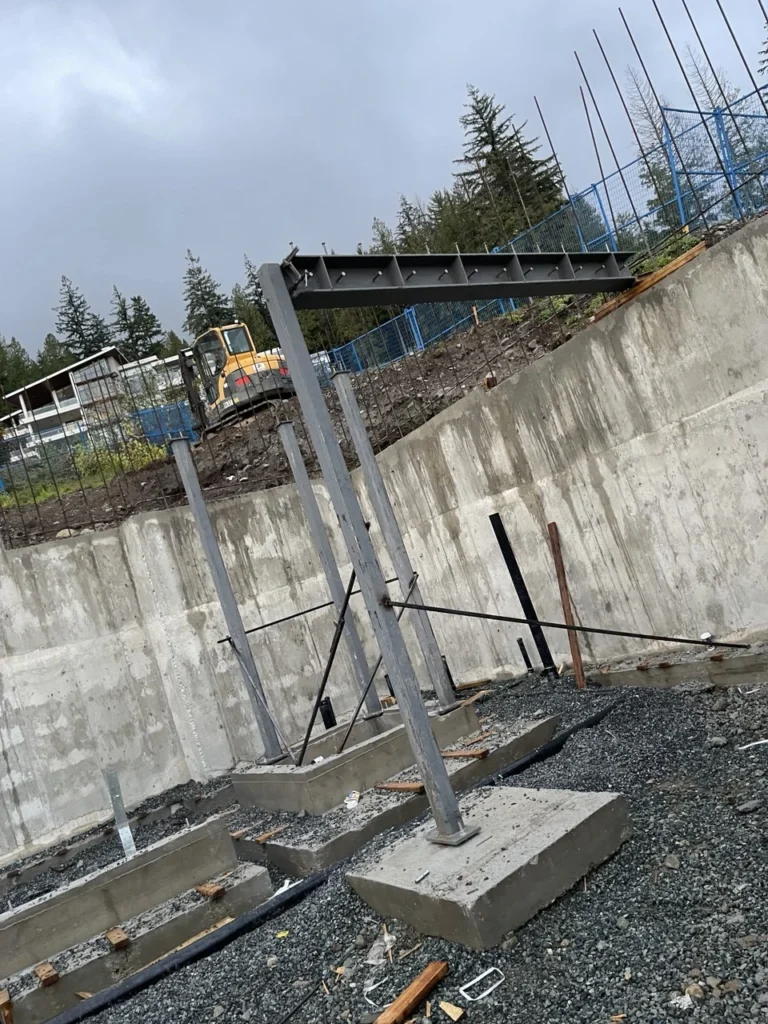
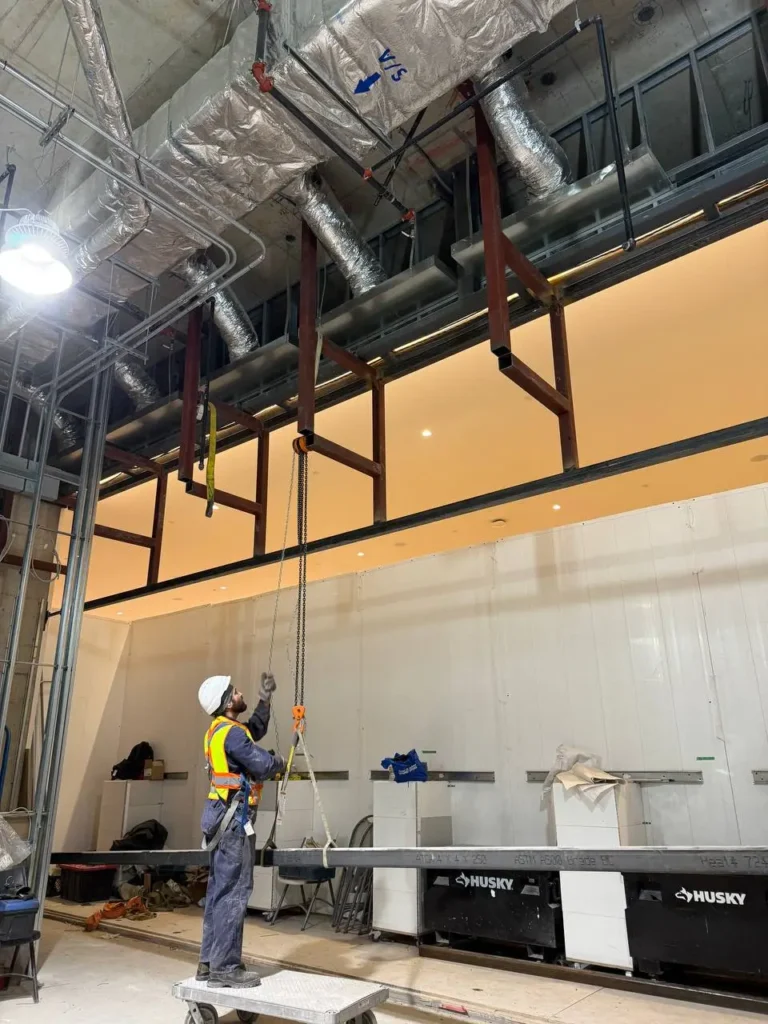
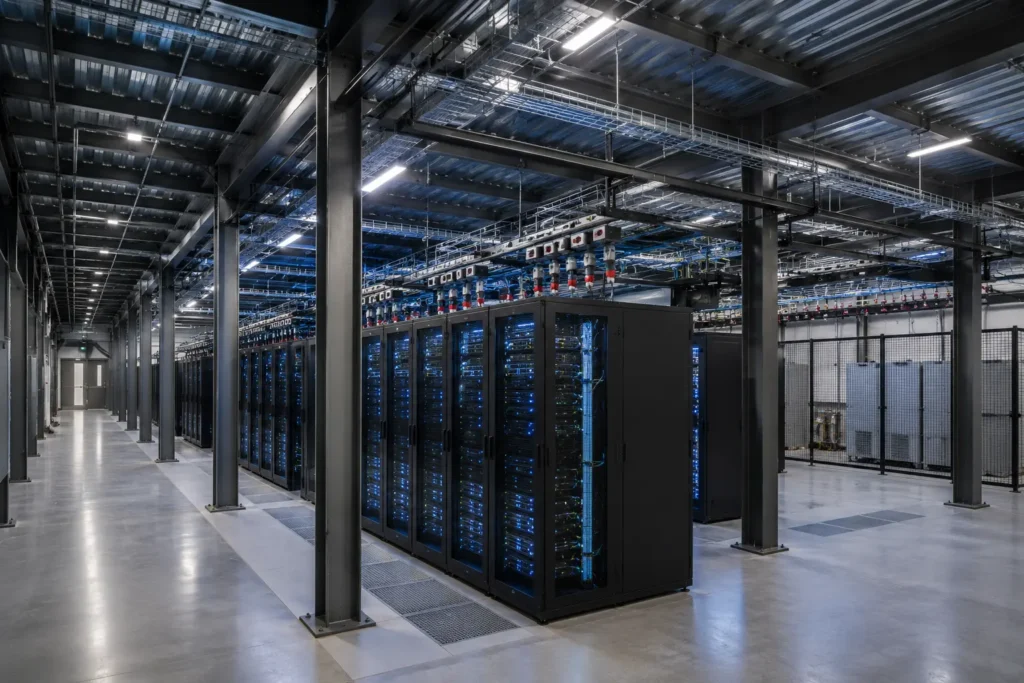
Structural Components Used in Steel Warehouses
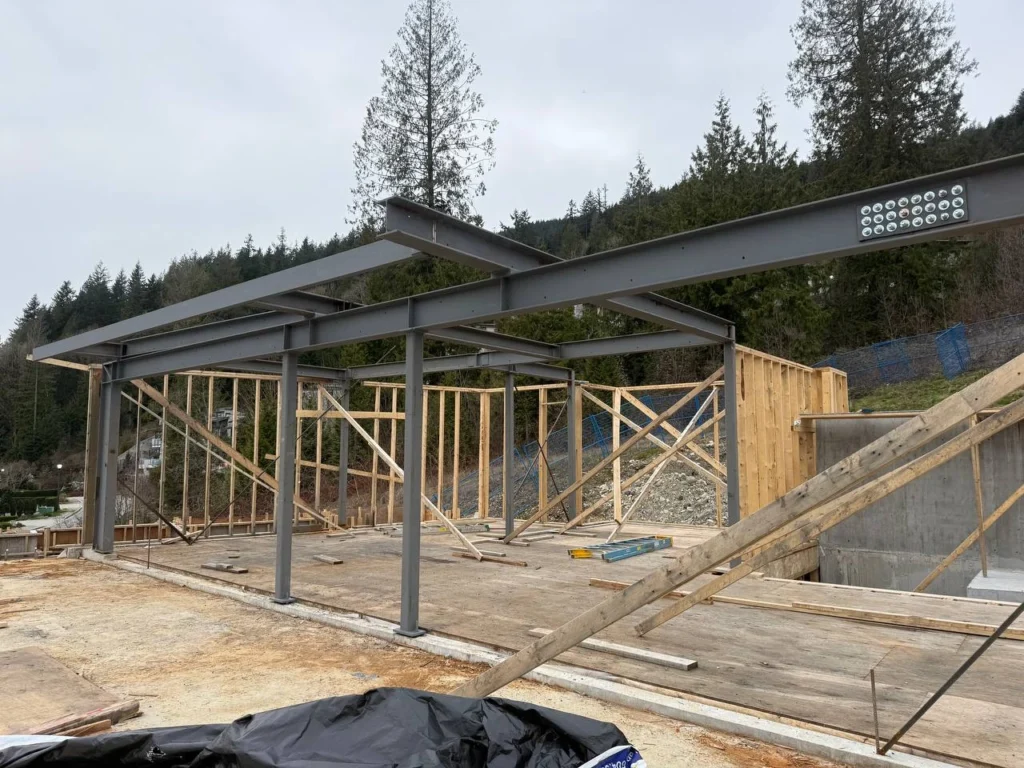
Warehouse steel buildings rely on several structural components that work together to support the building and transfer loads safely to the foundation.
Steel Columns
Steel columns provide vertical support for the roof, beams, mezzanines, and other structural systems. Their size and spacing are determined by the building design and engineering requirements.
Steel Beams
Steel beams support floors, roofs, equipment systems, and long spans. Wide flange beams are commonly used in warehouse construction because of their strength and efficiency.
Learn more about W flange beams.
Roof Framing
Steel roof framing supports the roof system and helps create wide interior spans. Depending on the project, roof framing may include beams, trusses, joists, and bracing systems.
Bracing and Connections
Bracing systems and structural connections help stabilize the warehouse and transfer wind, seismic, and operational loads through the building frame.
Mezzanines and Platforms
Steel mezzanines and industrial platforms can add valuable floor space for storage, offices, equipment, maintenance access, or production areas.
Explore our industrial platform services and our guide to steel mezzanine floors.
Warehouse Steel Building vs Concrete Construction
Steel and concrete are both used in warehouse construction, but each material has different advantages. The right choice depends on building size, project schedule, structural requirements, site conditions, and long term operational needs.
| Feature | Steel Warehouse Building | Concrete Warehouse Building |
|---|---|---|
| Construction speed | Typically faster due to off site fabrication | May require more forming, pouring, and curing time |
| Building weight | Lighter structural system | Heavier structural system |
| Clear spans | Well suited to large open layouts | May require larger structural members or more supports |
| Future modification | Often easier to expand or modify | Can be more difficult to change after construction |
| Fire performance | May require appropriate fire protection systems | Provides inherent fire resistance |
| Best fit | Warehouses, industrial buildings, logistics facilities | Heavy permanent structures and specific project conditions |
Warehouse Steel Fabrication Process
Accurate fabrication is essential for successful warehouse construction. Structural components must be prepared according to approved drawings so they fit correctly during installation.
The fabrication process may include:
- Reviewing engineering and shop drawings
- Measuring and cutting structural steel
- Drilling connection holes
- Welding plates, stiffeners, and brackets
- Preparing beams and columns
- Applying specified finishes or coatings
- Coordinating delivery sequences
Professional fabrication helps reduce site delays, improves installation accuracy, and supports smoother coordination with other trades.
Learn more about our structural steel fabrication services.
Steel Structure Erection for Warehouse Projects
Once fabrication is complete, the steel components are transported to the project site for erection. Steel structure erection involves lifting, positioning, aligning, bolting, welding, and securing the warehouse frame.
Warehouse erection requires careful planning because steel deliveries, cranes, equipment, site access, and construction schedules must be coordinated efficiently.
Typical erection work includes:
- Installing steel columns
- Installing structural beams
- Assembling roof framing
- Installing bracing systems
- Completing bolted and welded connections
- Installing mezzanines and equipment platforms
- Coordinating structural modifications
See our steel structure erection services.
Welding for Warehouse Steel Construction
Warehouse projects often require both shop welding and on site welding. Welding may be used for structural connections, plates, supports, stairs, railings, platforms, repairs, and custom components.
The required welding method depends on material type, connection design, load requirements, accessibility, and engineering specifications.
Avangard Steel provides welding services in Vancouver for structural, commercial, and industrial projects.
Steel Mezzanines for Warehouse Buildings
A steel mezzanine is one of the most effective ways to increase usable warehouse space without expanding the building footprint. Mezzanines use the building’s vertical space to add an elevated floor for storage, offices, equipment, packing areas, or operational activities.
Warehouse mezzanine systems may include:
- Structural steel columns and beams
- Steel stairs
- Guardrails and handrails
- Metal decking or grating
- Equipment platforms
- Access ladders
- Custom loading areas
A properly designed mezzanine can improve space utilization and delay the need for relocation or building expansion.
Warehouse Expansion Using Structural Steel
Business growth often creates the need for more storage, equipment space, loading capacity, or production area. Structural steel can make future warehouse expansion easier because steel framed buildings can often be extended or modified with coordinated engineering and fabrication.
Expansion options may include:
- Adding new warehouse bays
- Extending roof and wall framing
- Installing additional mezzanine floors
- Adding equipment support structures
- Creating new loading areas
- Modifying steel frames for operational changes
Planning for expansion during the original design stage can help reduce future construction challenges.
Warehouse Steel Buildings for Logistics and Distribution
Logistics and distribution facilities depend on efficient movement, clear access, and organized storage. Steel construction supports large open spaces that can accommodate racking, conveyors, loading docks, sorting systems, and vehicle circulation.
These buildings often require:
- High ceilings
- Large column spacing
- Multiple loading areas
- Strong roof and equipment support systems
- Flexible interior layouts
- Future expansion capability
Warehouse Steel Buildings for Manufacturing Facilities
Manufacturing warehouses may support machinery, production lines, overhead systems, mechanical equipment, and heavy material storage. Structural steel provides the strength and customization needed to support these demanding uses.
Custom steel solutions may include:
- Machine support frames
- Industrial platforms
- Maintenance access structures
- Equipment mezzanines
- Steel stairs and guardrails
- Mechanical support systems
How Much Does a Warehouse Steel Building Cost?
The cost of a warehouse steel building depends on the scale and complexity of the project. There is no single price that applies to every warehouse because building size, structural loads, site conditions, finishes, and installation requirements can vary significantly.
Common cost factors include:
- Total building size
- Required clear span
- Steel weight and member sizes
- Roof and equipment loads
- Mezzanines and platforms
- Fabrication complexity
- Welding and connection requirements
- Delivery and crane access
- Installation schedule
- Site location and conditions
For an accurate estimate, provide drawings, dimensions, site information, required completion dates, and details about the intended warehouse use.
How Long Does Warehouse Steel Construction Take?
The timeline depends on engineering, approvals, fabrication complexity, material availability, project size, and site coordination. Smaller warehouse modifications may be completed relatively quickly, while large structural projects require more planning and fabrication time.
The process usually includes:
- Project review and estimating
- Engineering and drawing coordination
- Shop drawing approval
- Steel fabrication
- Delivery scheduling
- Steel erection
- Final connections and review
Clear project information and timely approvals can help prevent delays.
Why Choose Avangard Steel for Warehouse Steel Construction?
Avangard Steel provides complete structural steel solutions for warehouse, commercial, and industrial projects across Vancouver and surrounding areas.
- Structural steel fabrication
- Steel structure erection
- Commercial and industrial welding
- Custom steel components
- Warehouse mezzanines
- Industrial platforms
- Steel stairs and railings
- Project and site coordination
- CWB certified fabrication standards
Our team works with owners, developers, engineers, general contractors, and project managers to provide steel solutions aligned with project requirements, approved drawings, and construction schedules.
Warehouse Steel Construction Areas We Serve
Avangard Steel serves warehouse and commercial projects throughout:
- Vancouver
- North Vancouver
- West Vancouver
- Burnaby
- Coquitlam
- Richmond
- Surrey
- Langley
- Delta
- The Lower Mainland
Related Structural Steel Services
- Structural Steel Fabrication
- Steel Structure Erection
- Welding Services
- Industrial Platforms
- Steel Mezzanine Floors
- Custom Metalwork
- Data Center Steel Structures
Planning a Warehouse Steel Building?
If you are planning a warehouse, distribution centre, industrial facility, manufacturing building, or commercial expansion, Avangard Steel can support your project with fabrication, welding, delivery, and steel structure erection.
Contact our team to discuss your drawings, project scope, schedule, and structural steel requirements.
Phone: 604 800 5040
Email: info@avangardsteel.com
Frequently Asked Questions
What is a warehouse steel building?
A warehouse steel building is a commercial or industrial building that uses structural steel beams, columns, roof framing, bracing, and connections as its primary structural system.
Why is steel used for warehouses?
Steel provides strength, wide clear spans, efficient installation, durability, and flexibility for future modifications or expansion.
Can steel warehouses include mezzanine floors?
Yes. Structural steel mezzanines can add storage, office, equipment, production, or maintenance space inside a warehouse.
Do you provide warehouse steel fabrication and installation?
Yes. Avangard Steel provides structural fabrication, welding, delivery, and steel structure erection services.
Can an existing warehouse be expanded with steel?
In many cases, yes. A structural engineer should review the existing building and proposed expansion before fabrication and installation begin.
How much does a steel warehouse cost?
Pricing depends on building size, structural loads, materials, mezzanines, fabrication requirements, site conditions, and installation complexity.
Which areas do you serve?
We serve Vancouver, North Vancouver, West Vancouver, Burnaby, Coquitlam, Richmond, Surrey, Langley, Delta, and surrounding areas.