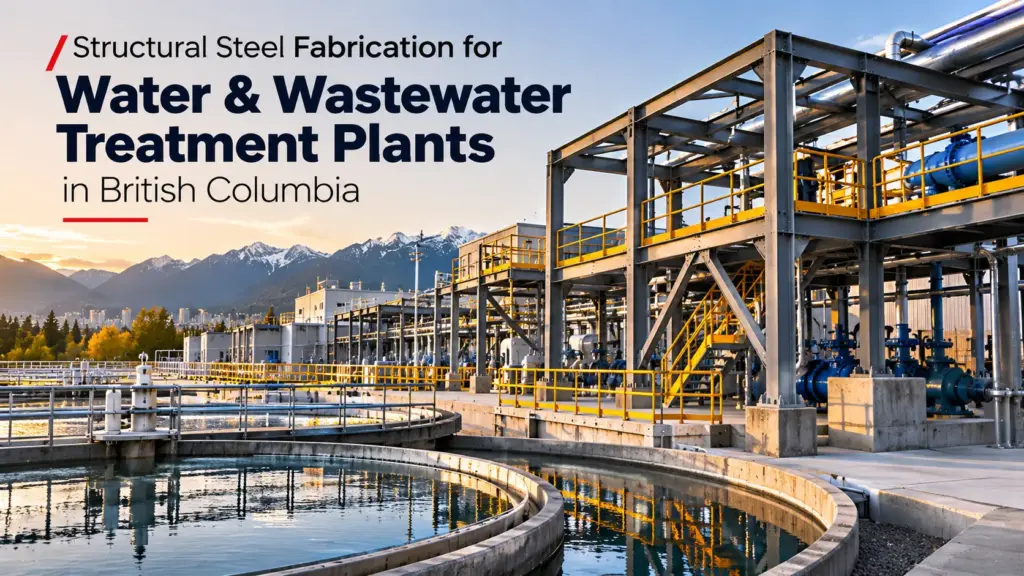
Structural steel for water treatment plants in BC supports process buildings, equipment frames, pipe racks, and maintenance access. A successful steel package starts with coordinated engineering, an exposure specific corrosion strategy, and an installation plan that fits the facility’s operating requirements.
For owners and general contractors, the key question is how the steel will perform throughout the plant’s service life. Moisture, treatment chemicals, equipment vibration, maintenance clearances, and future upgrades all affect the scope. This guide explains what to consider before requesting fabrication pricing for a new facility or an existing plant expansion.
Avangard Steel provides structural steel fabrication in Vancouver for residential, commercial, and industrial projects. For a treatment facility, share the engineered drawings and specifications so the team can review the proposed steel scope and project requirements.
Where is structural steel used in a water treatment plant?
Structural steel can carry building loads, support process equipment, and provide access for inspection and maintenance. The required material and finish can differ between a dry equipment room, an outdoor walkway, and a chemical handling area.
Process buildings and equipment frames
Columns, beams, bracing, and secondary framing can support treatment buildings and equipment enclosures. Separate frames may carry pumps, filtration equipment, or mechanical assemblies. Equipment suppliers should provide operating weights, support locations, vibration criteria, and maintenance loads before the support steel is finalized.
Pipe racks and service supports
Pipe racks organize process piping and utility routes. Coordination should include pipe loads, support spacing, thermal movement, valve access, and conflicts with electrical or mechanical services. A rack that fits the initial layout must also leave room for inspection and component replacement.
Platforms, walkways, stairs, and guardrails
Access steel helps operators reach instruments, valves, and equipment. Grating, landings, stairs, and guards need a coordinated layout that considers wet conditions, drainage, headroom, and clear access routes. Confirm the applicable safety requirements with the project design team before fabrication.

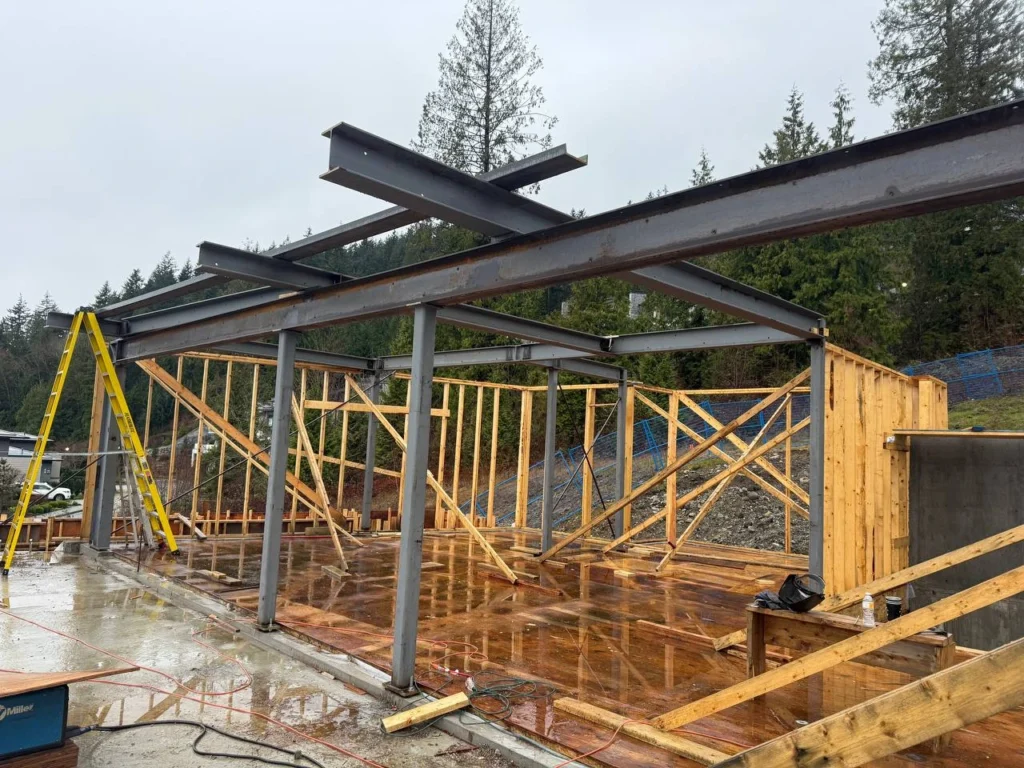
What makes water treatment steelwork different?
A treatment facility contains several exposure zones. Steel above an enclosed process area may face persistent condensation, while outdoor framing may experience repeated wetting and drying. Chemical storage or dosing areas can introduce a different exposure again. Specifying one finish throughout the plant can overlook these differences.
Drinking water treatment and wastewater treatment also require separate evaluation. Wastewater areas may introduce aggressive gases and biological conditions. A detail or coating used successfully in a clean, dry room should not automatically be repeated over a wastewater channel.
Map these conditions on the drawings early. Identify atmospheric exposure, splash zones, submerged components, chemical exposure, and any potential contact with drinking water. That information helps the engineer and coating specialist define an appropriate system.
Choosing corrosion protection for treatment plant steel
Corrosion protection should follow the actual environment and maintenance plan. The American Galvanizers Association’s guidance on steel in water environments explains that water chemistry, temperature, movement, and other conditions influence galvanized steel performance. Galvanizing should therefore be assessed for the specific exposure rather than assumed suitable everywhere.
Galvanized steel
Galvanizing may be considered for selected atmospheric applications, subject to the project specification. Splash and immersion service need closer evaluation. Coordinate member dimensions and fabrication details with the galvanizer before manufacture.
Protective coating systems
A specified coating system may be considered for carbon steel in an appropriate exposure zone. Define surface preparation, coating layers, inspection, and repair procedures in the contract documents. Include a plan for damaged areas after transport or erection.
Stainless steel and alternative materials
Some corrosive locations may call for stainless steel or another material. Grade selection, chemical compatibility, and connections between dissimilar metals require project specific review. Where components or coatings can contact drinking water, have the design team confirm the required suitability documentation.
Engineering and coordination for BC projects
The project engineer should establish the applicable design requirements, loading criteria, connection responsibilities, and review process. BC projects should use the code and standards applicable to their location and permit, together with the owner’s specifications. The Province provides official BC Building Code information for project teams to consult.
Before shop drawings begin, resolve equipment reactions, wind and snow exposure, seismic requirements, anchorage, and movement allowances as applicable. Avoid finalizing support frames from equipment footprints alone. The operating condition and maintenance activities can matter as much as the shipping weight.
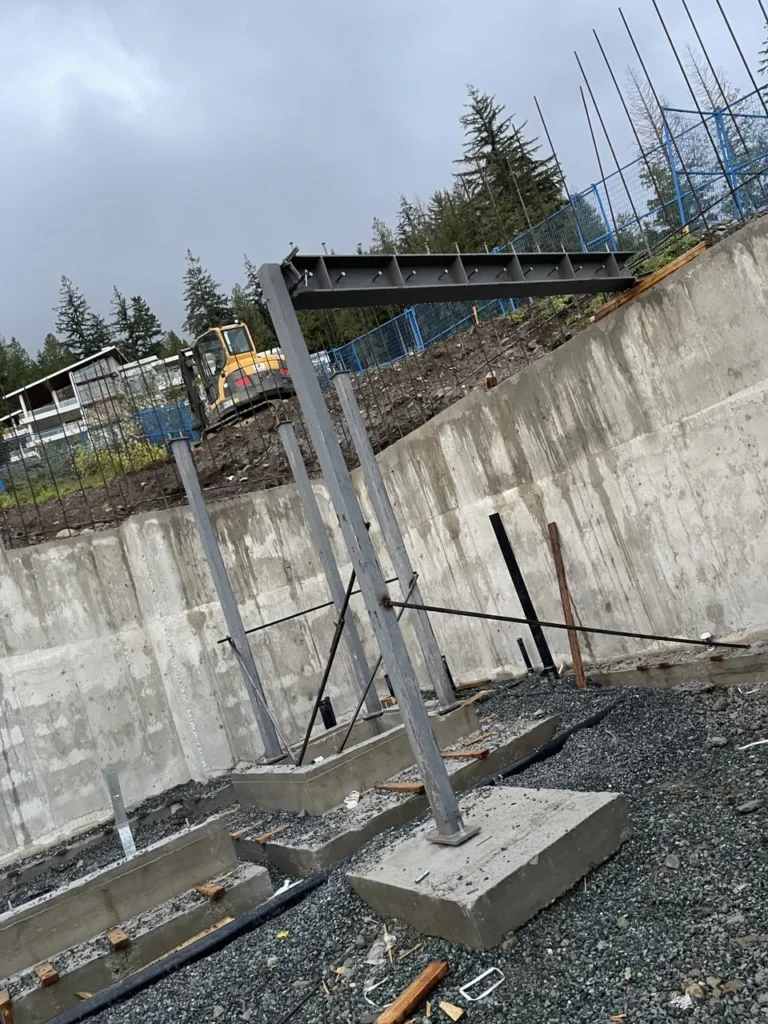
On an existing site, verify dimensions, concrete conditions, anchor locations, and clashes with installed services. Confirm who supplies field measurements and who approves changes. A clear responsibility split between the structural engineer, equipment supplier, fabricator, and installer helps reduce late revisions.
Planning fabrication and installation around plant operations
An operating facility may have limited shutdown windows, restricted lifting access, and areas that must remain available to staff. These constraints should be part of the steel package from the start.
Confirm the installation sequence: Identify which assemblies can arrive prefabricated, where they can be unloaded, and how they will reach the work area. Review temporary support and erection stability with the responsible professionals.
Coordinate connections and finishes: Resolve field welding, bolted connections, coating repairs, and inspection access before fabrication. The connection strategy should support both structural requirements and the site’s work restrictions.
Protect access for future maintenance: Check how pumps, motors, filters, or other major components will be removed. Removable platform sections or designated lifting routes should be designed and documented where required.
Define handover records: Agree on the required material records, inspection reports, coating documentation, and final drawings before work starts. The exact deliverables should follow the contract requirements.
What affects the cost of water treatment plant steel in BC?
Steel weight is only one part of the price. Complex connections, small custom assemblies, surface preparation, corrosion protection, site access, and installation phasing can materially change the total scope. An early budget should clearly identify assumptions and exclusions.
The main cost drivers include member sizes and quantities, equipment support details, coating requirements, grating and access components, inspection scope, freight, lifting arrangements, and shutdown restrictions. Changes to equipment layouts after detailing can also create additional fabrication or coordination work.
For a useful comparison, ask bidders to separate fabrication, finishes, delivery, installation, and any engineering or inspection included in their scope. Compare bids against the same drawing revision and specification package.
What to include in a fabrication quote request
Send a coordinated package with the project location, current structural drawings, relevant specifications, steel quantities where available, equipment information, exposure zones, required finish, and intended schedule.
For upgrades, add site photos, available field measurements, access restrictions, shutdown windows, and details of existing supports. State whether pricing is for a preliminary budget or a construction package, and identify outstanding design decisions.
Ask the fabricator to confirm inclusions, exclusions, drawing review time, finish coordination, delivery assumptions, and installation responsibilities. This turns a broad enquiry into a scope that can be priced and reviewed.
Frequently asked questions
Is galvanized steel suitable for water treatment plants?
It can be suitable for some applications, but suitability depends on the exposure. Atmospheric framing, splash zones, submerged components, and chemical areas require separate assessment. Have the design team approve the finish for each location.
Is carbon steel or stainless steel better?
Neither is the best choice for every area. Carbon steel with a suitable protective system may suit some locations, while other environments may require a specified stainless grade or alternative material. Exposure, maintenance, and project requirements should guide the decision.
Can structural steel be added to an operating treatment plant?
Yes, additions can be planned for an operating facility, subject to engineering and site review. Existing conditions, lifting access, temporary support, service conflicts, and shutdown requirements need to be resolved before installation.
How long does treatment plant steel fabrication take?
There is no reliable standard lead time for every package. Drawing approval, material availability, fabrication complexity, finishing, inspection, and delivery sequencing all affect the schedule. Request a programme based on the current drawings and required site dates.
Does Avangard Steel offer structural steel fabrication?
Yes. Avangard Steel’s steel structure service covers fabrication for residential, commercial, and industrial projects in the Vancouver area. Contact the team with your treatment plant drawings to confirm project fit, the proposed scope, and availability.
Discuss your treatment plant steel package with Avangard Steel
Planning structural steel for water treatment plants in BC starts with a clear scope. Send Avangard Steel your drawings, exposure requirements, site location, and target schedule to discuss fabrication needs.
Explore our steel structure fabrication services in Vancouver or contact Avangard Steel. Call 604 800 5040 or email info@avangardsteel.com.