Choosing between steel columns and concrete columns is one of the most important decisions in any construction project. Both materials are widely used in commercial, industrial, and residential buildings, but each offers different advantages depending on the project requirements.
In Vancouver and across British Columbia, steel structures are becoming more popular due to faster construction, higher strength, and modern design flexibility. However, concrete is still widely used for its cost-effectiveness and fire resistance.
Understanding the differences between steel and concrete columns can help you choose the best structural solution for your project.
Table of Contents
What Are Steel Columns?
Steel columns are vertical structural elements made from structural steel sections such as I-beams, H-beams, or hollow structural sections (HSS). They are designed to support loads from beams, floors, and roofs and transfer them to the foundation.
Steel columns are commonly used in:
- Commercial buildings
- Industrial facilities
- Warehouses
- Modern residential structures
Learn more about steel structure fabrication.
What Are Concrete Columns?
Concrete columns are structural elements made from reinforced concrete, which includes steel rebar inside poured concrete. These columns are widely used in traditional construction due to their compressive strength and fire resistance.
They are typically found in:
- Residential buildings
- High-rise structures
- Parking structures
- Infrastructure projects
Steel Columns vs Concrete Columns: Key Differences
1. Strength and Load Capacity
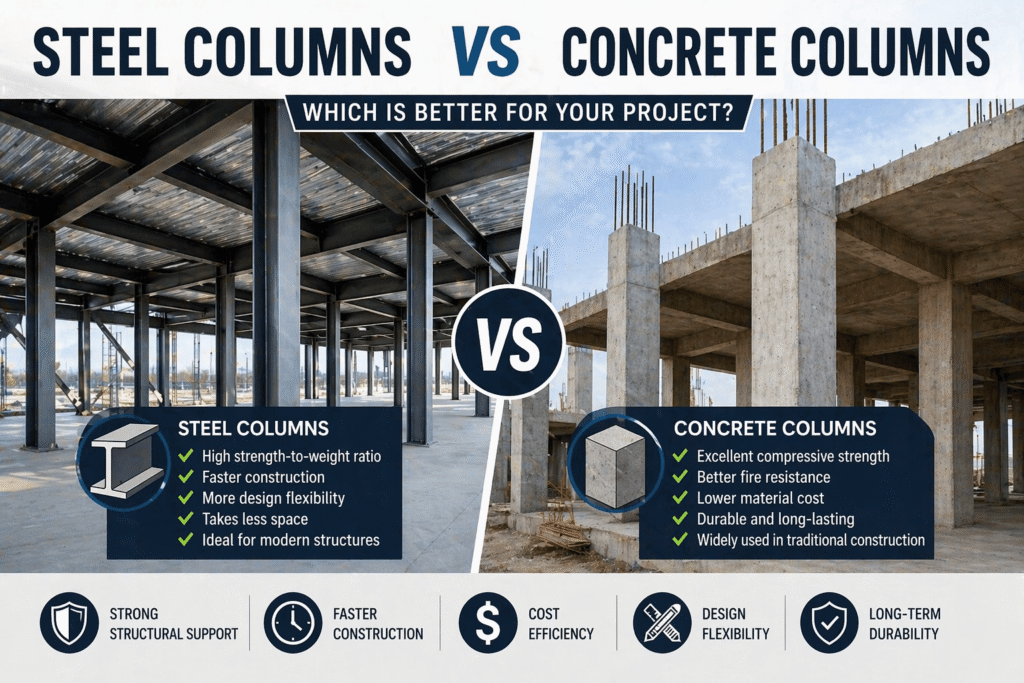
Steel columns have a higher strength-to-weight ratio compared to concrete. This allows them to support heavy loads while using less material and taking up less space.
Concrete columns provide excellent compressive strength but require larger dimensions to achieve the same load capacity.
2. Construction Speed
Steel columns are prefabricated and installed quickly on-site, significantly reducing construction time.
Concrete columns require formwork, curing time, and additional labor, which can slow down the project timeline.
3. Space Efficiency
Steel columns are thinner and take up less floor space, making them ideal for commercial buildings where maximizing usable space is important.
Concrete columns are bulkier and reduce available floor area.
4. Cost Considerations
Concrete is often cheaper in terms of material cost, but labor and time costs can increase due to longer construction timelines.
Steel may have higher upfront material costs but can reduce overall project costs due to faster installation and lower labor requirements.
5. Durability and Maintenance
Steel columns are highly durable when properly protected against corrosion.
Concrete can crack over time and may require repairs, especially in harsh weather conditions.
6. Fire Resistance
Concrete naturally offers better fire resistance.
Steel structures require fireproofing materials such as coatings or encasement to meet fire safety requirements.
When to Choose Steel Columns
- Commercial and industrial buildings
- Projects with tight timelines
- Modern architectural designs
- Projects requiring long spans and open layouts
When to Choose Concrete Columns
- Residential buildings
- Projects with limited budgets
- High fire resistance requirements
- Traditional construction methods
Steel vs Concrete for Vancouver Projects
In Vancouver and the Lower Mainland, steel structures are increasingly preferred for commercial and industrial construction due to speed, flexibility, and long-term performance.
For modern developments, steel allows architects and engineers to design more efficient and visually appealing buildings.
Advantages of Steel Structures in Modern Construction
- Faster construction timelines
- Higher strength-to-weight ratio
- Better design flexibility
- Reduced structural footprint
- Suitable for large-scale commercial projects
Need Structural Steel for Your Project?
If you are planning a construction project in Vancouver or surrounding areas, our team can provide high-quality structural steel fabrication and installation services.
Contact Avangard Steel today to discuss your project requirements.
Phone: 604-800-5040
Email: info@avangardsteel.com
Frequently Asked Questions
Are steel columns stronger than concrete?
Steel columns have a higher strength-to-weight ratio, allowing them to support heavy loads with less material.
Are concrete columns cheaper?
Concrete may have lower material costs, but labor and construction time can increase overall expenses.
Which is better for commercial buildings?
Steel columns are typically preferred for commercial projects due to speed, flexibility, and space efficiency.
Do steel columns rust?
Steel can corrode if not protected, but proper coatings and treatments prevent long-term damage.