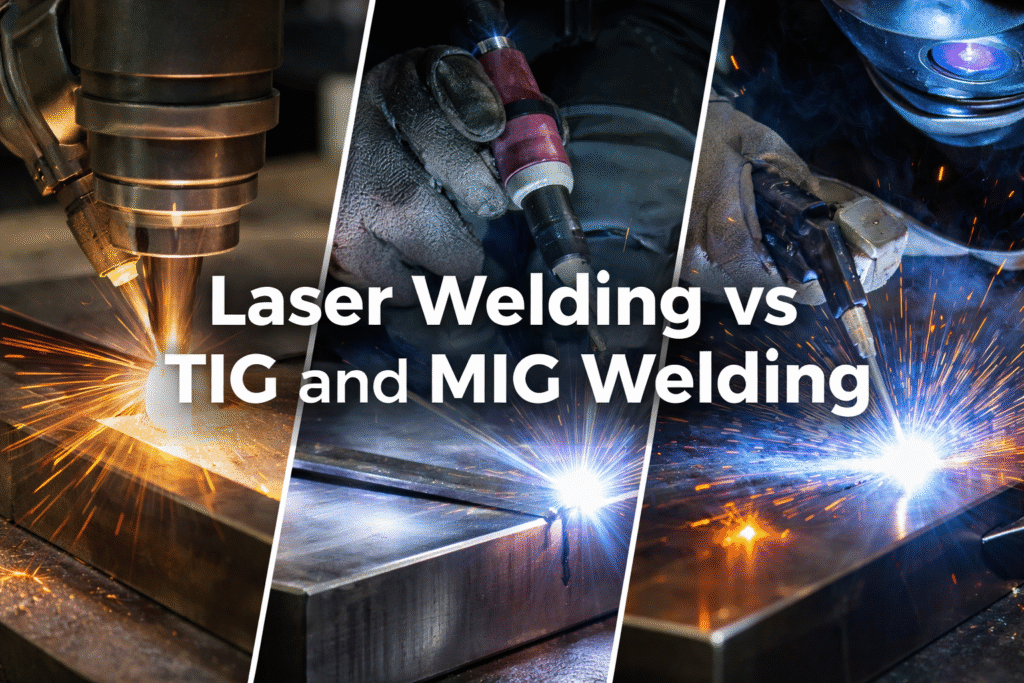
Welding technology has evolved significantly over the years, offering fabricators more precise, efficient, and application-specific methods than ever before. Among today’s most discussed techniques is laser welding, often compared to traditional methods such as TIG (GTAW) and MIG (GMAW) welding.
Table of Contents
Understanding the differences between these welding processes helps builders, designers, and project owners choose the right method for structural steel, custom metalwork, and high-precision fabrication projects.
What Is Laser Welding
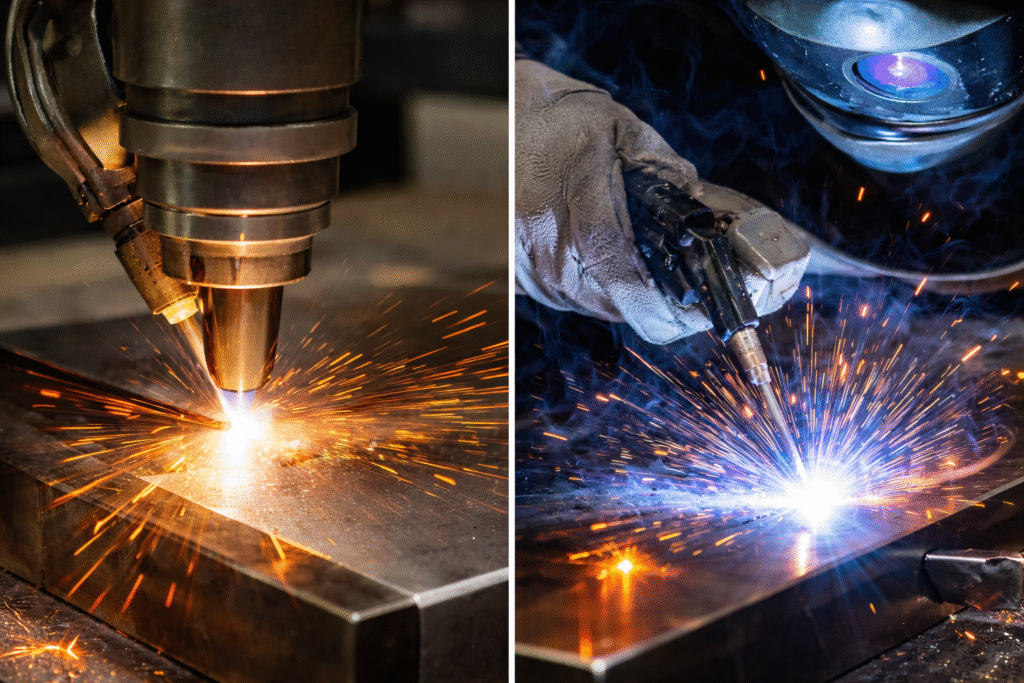
Laser welding uses a highly concentrated beam of light to fuse metals together. The laser generates intense heat at a very small focal point, allowing for extremely precise welds with minimal heat-affected zones.
This method is commonly used in applications where accuracy, clean finishes, and low distortion are critical. Laser welding is especially effective for thin materials, stainless steel, and detailed metal components.
For projects requiring precise fabrication and coordination, our custom metal fabrication services support a wide range of welding methods depending on material and application.
Laser, TIG, and MIG welding are commonly used in structural steel projects in Vancouver, especially where strength, accuracy, and long-term performance are critical.
For commercial and industrial applications, welding is often integrated into commercial steel construction and miscellaneous steel components such as platforms, stairs, and access systems.
Visible welds and architectural finishes are frequently part of architectural metalwork and steel design, where TIG or laser welding may be preferred.
What Is TIG Welding
TIG welding, also known as gas tungsten arc welding, uses a non-consumable tungsten electrode to create the weld. Filler material is added manually when required.
TIG welding is valued for its control and weld quality, making it a preferred option for stainless steel, aluminum, and visible architectural steel where appearance matters. However, it is slower and requires a high level of skill.
What Is MIG Welding
MIG welding, or gas metal arc welding, uses a continuously fed wire electrode and shielding gas. This method is faster than TIG welding and well suited for thicker materials and structural applications.
MIG welding is widely used in structural steel fabrication, industrial projects, and general metal fabrication where productivity and strength are priorities.
Key Differences Between Laser, TIG, and MIG Welding
Precision and Accuracy
Laser welding offers the highest precision, producing narrow, clean welds with minimal distortion. TIG welding also provides excellent control but over a wider heat area. MIG welding prioritizes speed and strength over fine detail.
Heat Input and Distortion
Laser welding applies heat in a very localized area, reducing warping and heat-affected zones. TIG welding introduces moderate heat, while MIG welding produces the largest heat input, which may require post-weld correction on thin materials.
Speed and Efficiency
MIG welding is generally the fastest manual process for large-scale fabrication. Laser welding is extremely fast in automated or repetitive applications. TIG welding is the slowest but offers superior finish control.
Material Thickness and Application
Laser welding excels with thin to medium-thickness materials. TIG welding works well across a range of thicknesses where appearance is important. MIG welding is ideal for thicker steel sections and structural components.
When Laser Welding Makes Sense
Laser welding is best suited for projects that require tight tolerances, minimal finishing, and high repeatability. It is often used in precision fabrication, stainless steel components, and specialized architectural elements.
When TIG or MIG Welding Is the Better Choice
TIG welding remains a top choice for visible welds, custom metalwork, and projects where appearance and control are essential. MIG welding continues to be the most practical option for structural steel fabrication, industrial frames, and load-bearing assemblies.
Professional welding practices often follow recognized industry standards, including those established by the Canadian Welding Bureau (CWB) , which sets quality and safety requirements for certified welding operations in Canada.
Choosing the Right Welding Method for Your Steel Project
No single welding method is right for every application. The best approach depends on material type, thickness, structural requirements, appearance expectations, and project timeline.
An experienced steel fabricator will evaluate these factors and select the most appropriate welding process to ensure safety, durability, and quality.
Professional Steel Welding in Vancouver and BC
At Avangard Steel, we apply the right welding method for each project, whether it involves structural steel, custom metal fabrication, or architectural steel components. Our team focuses on precision, strength, and long-term performance for projects across Vancouver, North Vancouver, West Vancouver, the North Shore, and British Columbia.
Welding process selection can also depend on material properties and engineering requirements, as outlined in general guidance from The Fabricator .
Frequently Asked Questions About Welding Methods
What is the main difference between laser welding and MIG welding
Laser welding uses a concentrated beam for high precision and minimal heat distortion, while MIG welding uses a wire-fed electrode and is better suited for thicker materials and structural steel applications.
Is laser welding stronger than TIG welding
Strength depends on application and material. Laser welding produces very clean, precise welds, while TIG welding offers excellent control and strength for visible and detailed metalwork.
Which welding method is best for structural steel
MIG welding is commonly used for structural steel due to its speed and strength. TIG welding may be used for detailed connections, while laser welding is applied in precision or automated environments.
Is laser welding suitable for construction projects
Laser welding is typically used for precision components rather than large structural assemblies. In construction, it is often combined with other welding methods depending on project requirements.
How do I choose the right welding method for my steel project
The right welding method depends on material type, thickness, structural requirements, appearance expectations, and budget. A professional steel fabricator can recommend the most appropriate solution.
Does Avangard Steel follow certified welding standards
Yes. Avangard Steel follows recognized Canadian welding standards and applies proper quality control procedures to ensure safe, durable, and compliant steel fabrication.
If you are planning a steel project and need expert guidance on welding methods and fabrication, call 604 800 5040 or email info@avangardsteel.com to discuss your requirements.